
Award-winning feature · Handelsblatt on location
North Korea – Inside a Dictatorship
No state in the world is as sealed off as North Korea. Its citizens have retreated into a world of illusion – including a fake car brand and a gigantic water park. A visit to a country in a state of mental siege.
Note: This piece was automatically translated with AI. The original German version was published in Handelsblatt on 7 June 2018.
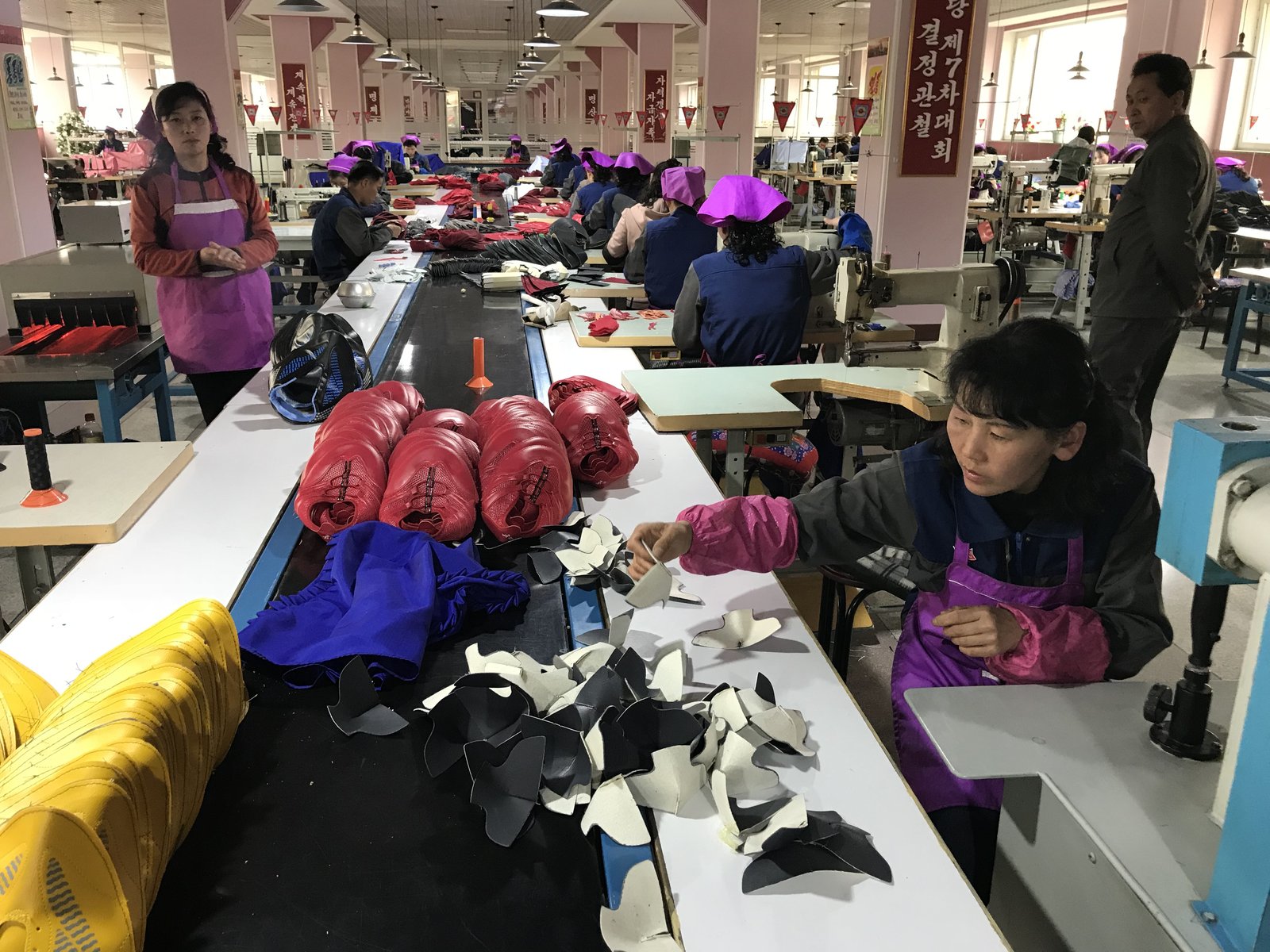
Pyongyang. At the bag manufacturer Sonamu, the future of North Korea is being tested. Factory manager Go Un Huk leaves no doubt about this as she leads me across the company's premises. The walls are freshly painted, the hedges neatly trimmed. The air smells of freshly mown grass. "We are the model for high-tech production in North Korea," says Sonamu manager Go.
She escorts me into the spotlessly clean entrance hall, strides across the cool stone floor and stops in front of a picture. Illuminated by blazing spotlights is an oversized photograph of North Korea's ruler Kim Jong Un.
In it he is holding a pink school satchel decorated with colourful cartoon characters. "We are so proud that the great leader, Marshal Kim Jong Un, visited us," she says. "Thanks to his wise leadership we can serve as a model for the whole country."
While Ms Go prepares to launch into further words of praise, the lights suddenly go out. Ms Go looks irritated. "Power cut," she says curtly. Then she pulls out her mobile phone. "We can sort this out," she says. A few minutes later the lights come back on. With a satisfied smile, Ms Go leads the way to the first floor. "This is where the material for our bags is cut. We have a high-tech laser machine for this," she says and pushes open the doors to the production room. There is a sharp smell of plastic. On the floor of the room, men and women crouch with scissors in hand before large pieces of fabric. But Ms Go barely notices them. She walks purposefully to the other end of the room and stops in front of a grey-orange machine.
"There it is," she announces proudly. The North Korean Academy of Scientists had developed the modern laser device, she says, enabling rucksacks and bags of the highest quality to be produced for the people with maximum precision at breakneck speed. With a proud smile, she strokes the metallic surface of the apparatus. "Well?" she says, looking at me expectantly.
An awkward moment of silence follows while I rack my brain for an answer. The supposed high-tech machine looks to me like a relic from a technology museum. "Interesting," I finally manage after a long pause. Later I show photographs of the alleged wonder machine to German industrial experts, who tell me it is probably a Chinese-made machine that is 20 to 30 years old. The North Koreans appear to have given it a fresh coat of paint and fitted it with their own logos. Technological progress here is not practised but simulated.
I have been invited to form an impression of North Korea as a journalist. The sealed country rarely allows reporters in. As the only German I am part of a group of six correspondents from four countries that North Korea has admitted for a research tour. I had been seeking a visa for a long time. Why it was approved just now, I do not know. Presumably the country wants to show itself at its best – or what it considers to be its best – shortly before the historic summit between ruler Kim and US President Donald Trump.
I flew from Beijing to Pyongyang on a Tupolev operated by North Korea's state airline Koryo. The airline holds the title of worst airline in the world from the rating service Skytrax. As I bite into the cold hamburger served as in-flight catering, I can see clearly how the fully loaded Tupolev crosses the Yalu River, which separates China from North Korea. On the Chinese side, high-rise buildings line the banks; in North Korea, only isolated rooftops are visible amid the farmland.
I wonder what will await me after landing. The excitement of being allowed to experience a country that is barely accessible to journalists is mixed with apprehension. I spent five years working as a correspondent in China. The worst that threatened me there was expulsion. But in North Korea? I feel exposed and defenceless.
My fears seem to be confirmed on landing in Pyongyang. A security officer beckons me aside. I have to hand over my smartphone, which he carries away. He then instructs me to start my laptop and type in my password. The Handelsblatt's technology department had specially encrypted the computer. But with my password the soldier has full access. He clicks through the stored photos and opens documents.
After a few moments he nods to me and returns the laptop. Shortly afterwards another man brings back my smartphone. I stow both in my rucksack. As I do so I wonder whether spyware might have been installed on the computer and phone in the meantime. An unease comes over me that will not leave me for the entire duration of my time in North Korea.
I am then received by my two minders Ri Chung Il and Kim Jong Hun, who will accompany me throughout the trip. It is they who determine which places I may visit and which people I may speak to.
For years the North Korean leadership has been telling its people that the standard of living will gradually improve. When ruler Kim Jong Un took over the government in December 2011 after the death of his father, he promised his people a better everyday life. Whereas military development had previously taken first place, Kim Jong Un proclaimed the "Byungjin" policy, propagating a simultaneous focus on economic progress and the building of nuclear weapons.
Kim demands unconditional subordination from the population. In return he promises a rising standard of living. The Communist leadership in China has built its power on this principle for years. But unlike in the large neighbouring country, Kim's calculations risk failing to pay off. In response to North Korea's nuclear weapons tests, the United Nations tightened its sanctions regime step by step. Oil deliveries in particular are severely restricted. This threatens to jeopardise Kim's plans. But so far the regime is doing everything to ensure that the population does not feel it – above all in the capital.
In a conference room at the Potonggang Hotel, economics professor Ri Gi Song asks me for an interview. Outside the sun is shining; inside, curtains block the windows. Everything is in dark, earthy colours: the long wooden table, the carpet and the heavy armchairs. Plastic flowers, arranged in the centre of the huge table, provide the only point of colour in the dim hall.
Flanked by two colleagues, Professor Ri takes a seat along one side of the table. The economist from the Academy of Social Sciences is considered one of the chief architects of North Korean economic policy. On the other side of the table, opposite Ri Gi Song and his two colleagues, I sit alongside my minders and the other reporters. "Sanctions cannot harm us. They only reinforce our course of becoming independent from the rest of the world," says the professor.
I ask whether he can back this up with figures. Professor Ri looks serious: "Because we are confronted with direct confrontation, we cannot disclose specific economic data." But he can assure us: "We are completely independent. The Juche idea of our great leader President Kim Il Sung has taught us self-sufficiency." There is nothing that North Korea cannot produce on its own. "We are also developing our own petrol from coal."
Petrol from coal? My mind turns to Nazi propaganda in Germany. The liquefaction of coal was supposed to make the Third Reich independent of raw material imports. But the quality and energy efficiency never matched other fuels, so the process was abandoned after the Second World War.
In North Korea the idea lives on. Under the dogma of Juche ideology, even inefficient fuels are desirable if they foster the appearance of independence. But Professor Ri wants nothing to do with inefficiency. On the contrary: "Even the German ambassador in Pyongyang has publicly confirmed that our country has achieved tremendous economic successes."
"The Claims Are Completely Fabricated"
What Professor Ri does not know is that I have a meeting with the German ambassador shortly afterwards.
Many of the embassy buildings in Pyongyang are located in a sealed-off district – including the German mission. Barbed-wire fences screen off the area. At the entrances, soldiers stand with weapons at the ready. They check everyone who wants to enter or leave the district.
Ordinary North Koreans are not even permitted to come near the embassy buildings. I am waved through. Shortly afterwards I enter the grounds of the German mission. Ambassador Thomas Schäfer receives me with a friendly smile.
Beige office furniture and grey walls characterise the interior – the Federal Republic has taken over the former East German embassy building in Pyongyang. The Federal Republic has only maintained diplomatic relations with North Korea since 2001. On the statements of economics professor Ri, Schäfer has a clear answer: "The claims of the economics professor are completely fabricated. I have made no such statements whatsoever."
The German diplomats' assessment of North Korea's situation is sobering. The German Foreign Office attests that North Korea faces problems with food supply for the population and: "The infrastructure is dilapidated; numerous industrial facilities have been out of operation for years or are kept running at a rudimentary level. There are major problems with energy supply."
Nevertheless – or perhaps for that very reason – there are German entrepreneurs who have not entirely taken their eyes off North Korea. Georg Dückinghaus is one of them. The owner of plant manufacturer Trubatec from Ahlen in Westphalia delivered the first equipment to North Korea fourteen years ago. "The contact came through the commercial attaché of the North Korean embassy in Berlin," says Dückinghaus, who also ventures into other difficult countries, for example in Central Asia.
Trubatec has since delivered two dairies, a brewery, two window production facilities and a printing press to North Korea. "We supplied reconditioned old machines. New equipment would have been too expensive for the North Koreans," says Dückinghaus. One thing was particularly important to the buyers: "The machines had to look like new. We had to have them thoroughly refurbished."
Business has now come almost to a standstill. "The North Koreans would like to expand the facilities but they lack the money," says Dückinghaus. So he now only supplies spare parts. Even this is becoming difficult to handle.
Due to the sanctions, German banks are not processing financial transactions with North Korea. Even the logistics company that Dückinghaus has worked with until now can no longer send products to Pyongyang. Nevertheless, Dückinghaus maintains the contacts: "If the country ever opens up, I'll already have a foot in the door."
Wolfgang Nowak agrees with the reasoning. "There is incredible potential for this country to develop economically," says the former head of planning in the Chancellery under Gerhard Schröder. Nowak has been travelling regularly to North Korea since 2012. The country has many raw materials, there are well-educated people, he says, and it is favourably situated close to the economic powers China and Japan. Do undiscovered business opportunities lie dormant in North Korea?
Three years ago the last delegation of German companies travelled to North Korea. Norman Langbecker from the East Asia Association of German Business (OAV) in Hamburg organised the tour. "We were led to a field. The North Koreans wanted us to open a German special economic zone there. From our perspective, the plan was unrealistic at that point in time," recalls Langbecker. Several German entrepreneurs subsequently tried to initiate business dealings, but this proved difficult. Communication often had to go through the North Korean embassy in Berlin. Replies were slow in coming. To this day nothing has come of the projects.
German brands are present in North Korea – if not at first glance. I notice this in Pyongyang's road traffic. Many cars bear the characteristic logo of the North Korean car brand Pyeonghwa, with two doves of peace. But the models look suspiciously familiar to me.
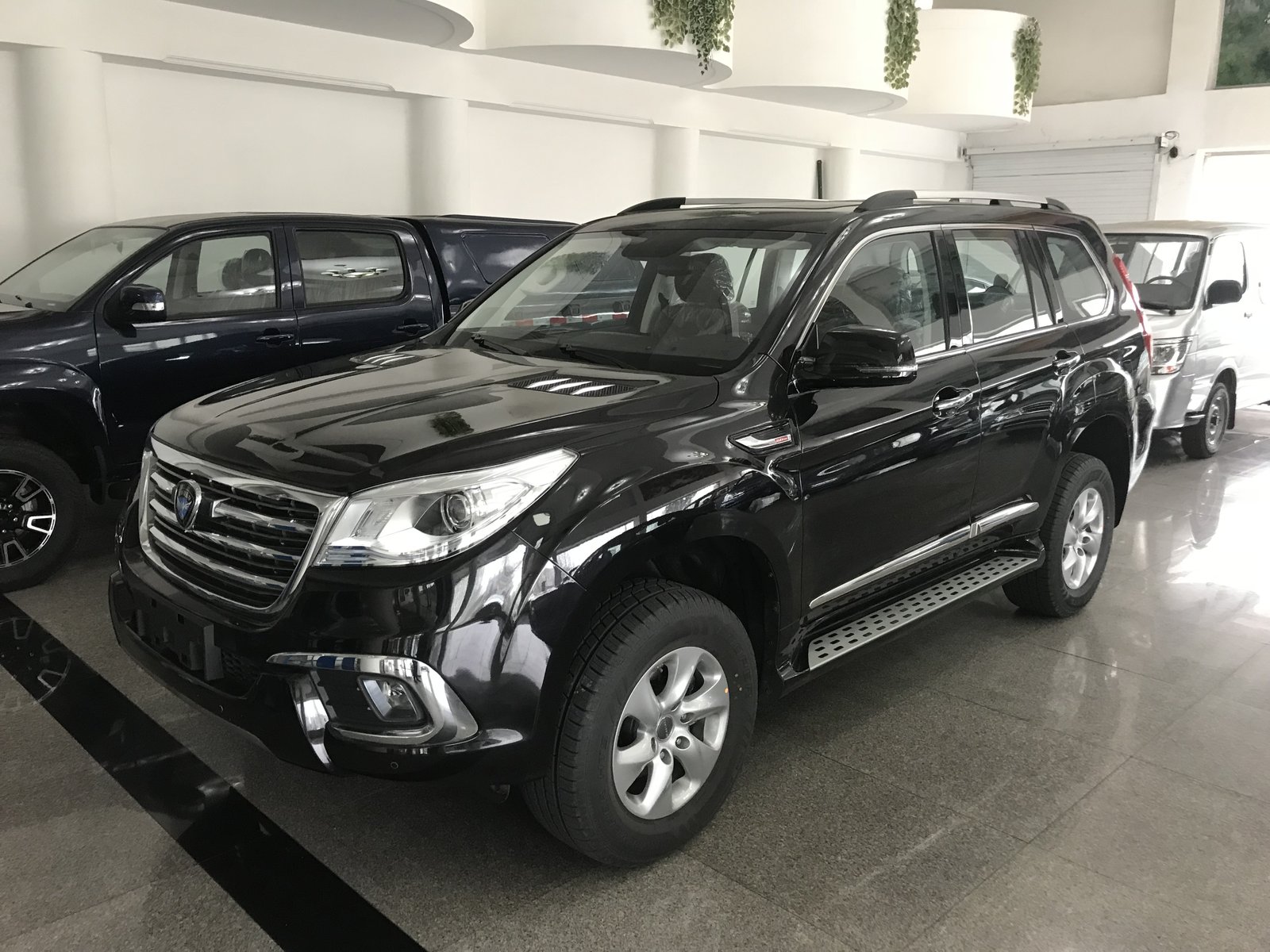
In a large car park I inspect some of the cars more closely. They certainly have the Pyeonghwa logo on the radiator grille. But when I look through the windscreen I see a familiar inscription on the steering wheel: VW. Many of the vehicles ostensibly made in North Korea appear in fact to be imported Volkswagens.
The only Pyeonghwa plant, south of Pyongyang, was supposed to roll out 10,000 cars a year. But experts, based on analysis of satellite images, believe that production has been at a standstill for some time.
I want to find out more and ask my minders for a visit to the factory. The request is rejected; instead I am driven to the only car showroom in North Korea: the central Pyeonghwa display centre in Pyongyang.
Granite flooring, the smell of new cars, bored sales staff behind the counter – everything looks like a provincial car dealership in Germany. Glossy brochures advertise the various vehicle models. In the showroom they stand ready for prospective buyers to sit in. The luxury version looks familiar. "Please, come and take a seat," says salesman Ri Song Jun.
I open the door and sink into the driver's seat. And then I notice it: not only on the steering wheel but also on the instruments and even on the door frames is the Chinese brand name Haval. The vehicle appears to be the Haval H6 SUV, which is popular in China.
I ask salesman Ri about the logos. "This is a Pyeonghwa vehicle. But it is possible that we received individual parts from China," he says. Individual parts? The vehicle seems to me quite obviously to have simply been imported from China. Even the descriptions on the door frame are in Chinese. Only the Haval logo on the front and rear has been replaced with Pyeonghwa's doves of peace. But Mr Ri wants to hear nothing of the sort. "No, no, this is a Pyeonghwa car," he insists.
Appearances count for more than reality. North Korea's development is performed rather than achieved. And everyone plays along. Even international North Korea experts do not really know how the state is doing. Is Pyongyang approaching collapse because of the sanctions, or are the Chinese, as its most important trading partners, still supplying enough oil and other goods for the country to hold out for a long time to come? No one seems able to give me a real answer to this question.
Alexander Hirschle is Korea director at Germany Trade & Invest (GTAI), the foreign trade agency of the Federal Republic of Germany. From Seoul he focuses intensively on the northern part of the peninsula. He concedes: "It is very hard to obtain reliable information about the situation in North Korea." Official data from Pyongyang is notoriously unreliable.
Unsettling Normality at the Water Park
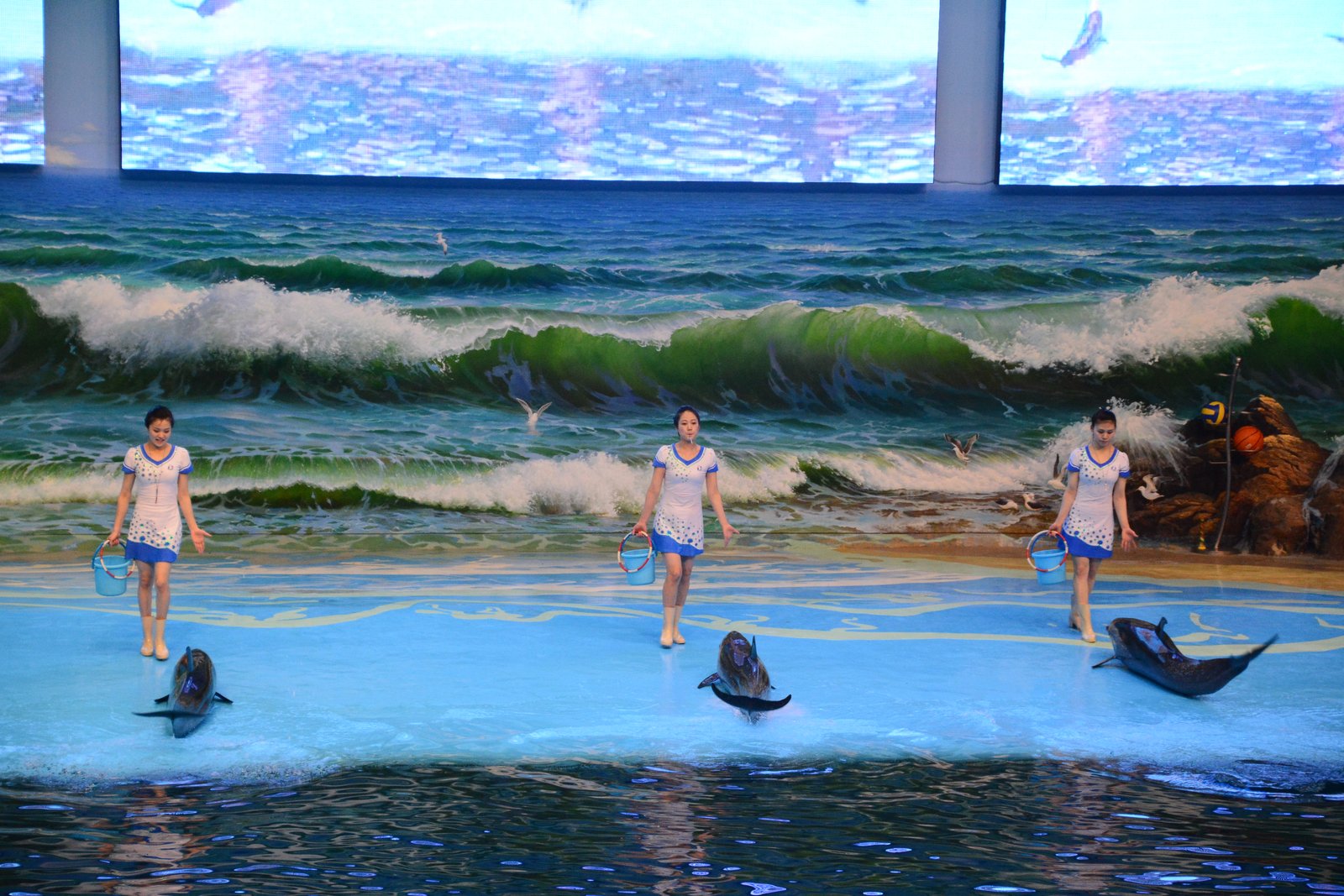
Performed normality dominates. My minders lead me from one mega-project to the next. There is the vast amusement park, the dolphinarium, the natural history museum and finally the Munsu Water Park.
At the entrance we are greeted by the life-size figure of Kim Jong Il, who died in 2011. His beige jacket and trousers almost match the yellow artificial sand on which he poses in front of a photograph of a coastal landscape. "No photographs," park manager Choe Un Hwa asks us. She then accompanies us to the first floor of the water park, from which we have an overview of the various pools.
Children shriek with delight in a wave section. Adults swim lengths in a long competition pool. A colourful slide runs through the interior of the hall and deposits laughing swimmers into a small basin. A crowd has gathered at an ice-cream stand. A man takes an ice cream and hands it to a child he is carrying in his arms.
Few things during my visit to North Korea have unsettled me as much as the sight of this peaceful scene. Of course I know that there are far larger water parks in the world, but I have never been in a facility of even remotely comparable scale. How can a state that in the 1990s had hundreds of thousands of people starving produce something like this?
The aquatic paradise is one of Kim Jong Un's most important showcase projects. North Korea's state news agency KCNA reported that Kim personally reviewed 13 designs of the 150,000-square-metre site before choosing one. Soldiers were drafted in for construction. "Thanks to the wise leadership of the great leader, Marshal Kim Jong Un, we can enjoy this facility today," says park manager Choe Un Hwa. North Korea can do anything, she says – build nuclear weapons and water parks alike.
Kim Jong Un uses nuclear bombs as a life insurance policy. Not even the US military dares to attack a dictator who could plunge the world into a nuclear war. At the same time Kim wants to keep the country's capital elite content by affording them a high standard of living. But others must pay a high price for this. It becomes vividly clear to me when I observe a scene at the roadside in an outer district of Pyongyang.
Along the roads, small strips of lawn have been laid out. But in many places the grass has withered. Lush green areas alternate with dark brown patches. On this day, hundreds of older women are deployed here. They sit along the roadside for several kilometres.
Using their hands and simple tools, they are busy transplanting small sections of turf. The plants are moved from the green spots to the brown areas, creating an evenly sparse grass surface. It is one of the mass programmes by which Kim keeps his people occupied. In totalitarian North Korea unconditional subordination is demanded of every citizen. Too much leisure time is dangerous there.
And again that incomprehension: how can a country that sends hundreds of pensioners to dig up blades of grass be developing nuclear weapons? The question simply will not leave my head.
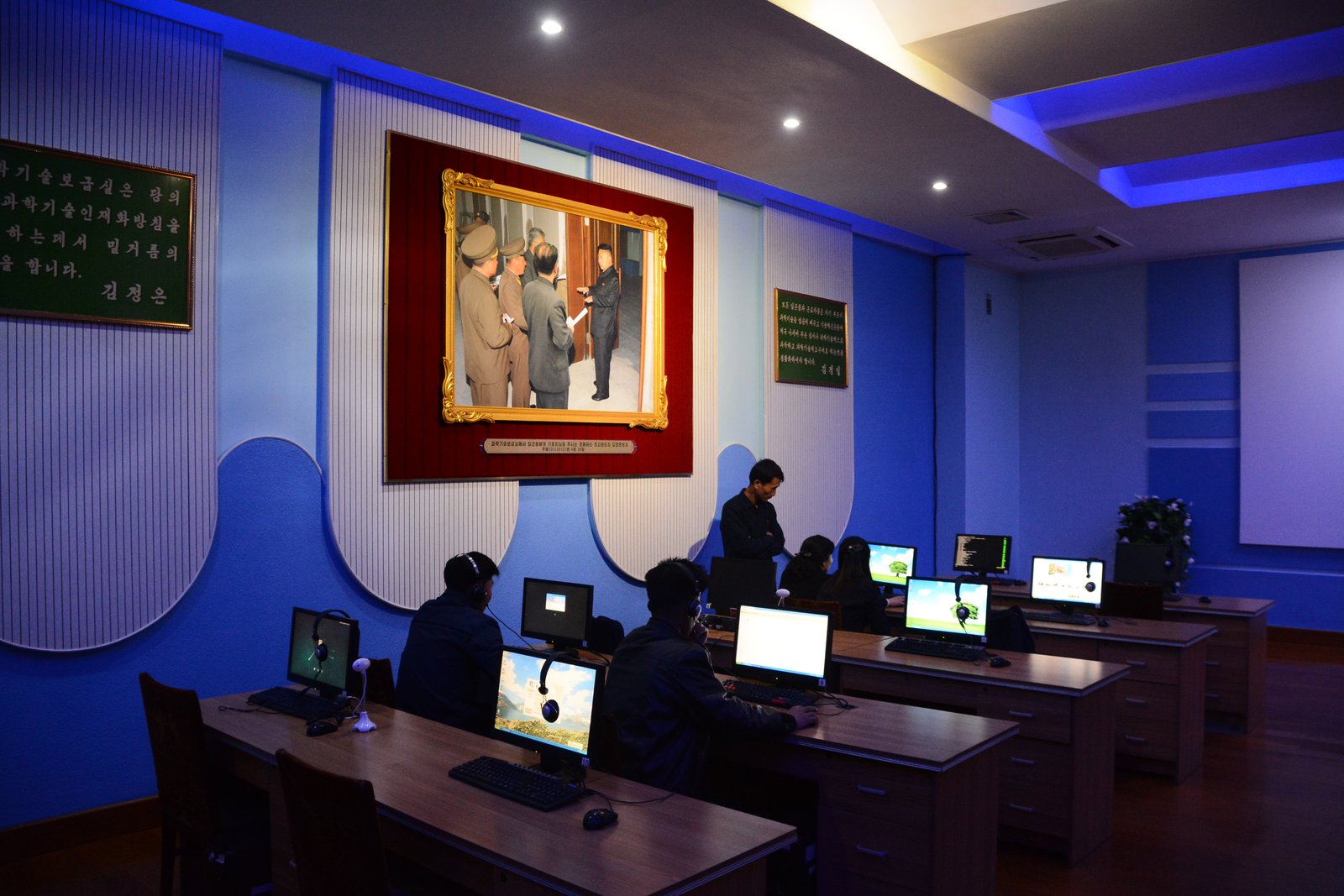
At Kim Il Sung University, the university representative proudly tells me that this is precisely where the country's nuclear scientists are trained. But when I ask the students, none of them has ever used the internet. A student I meet in the university's computer room tells me proudly that he is studying computer science. "I don't need the internet. Our North Korean intranet has everything we need," he claims.
Fear and Self-Delusion
Nuclear scientists without internet? I cannot shake the impression that North Koreans are constantly deceiving themselves about their country's achievements. Nowhere did this become so clear to me as during the tour of the bag factory with Ms Go and her enthusiasm for the supposedly ultra-modern laser machine.
The sanctions are no threat, she tells me repeatedly. They are simply confirmation that her country can get along without the rest of the world. The laser machine, for instance: "That is high tech 'made in North Korea'." I ask whether I might watch the machine in operation. Ms Go glances at a worker. He shrugs. "Today's production is already finished," says Ms Go. But it is only midday, I point out. "We are simply fast," Ms Go replies. "But we will give you a small taste of what the machine can do."
The worker gets to work at a computer next to the machine. It takes several minutes for the machine to start up. Then it begins to move with a deep humming sound. But before it can cut the first pieces of fabric, Ms Go intervenes again. "There. That's enough. Now you have seen the principle."
Before she has finished her last words, she leads into the next room of the production facility. Around three dozen women sit at old models of Singer electric sewing machines – the US market leader. At each workstation there hangs a booklet containing propaganda texts.
"In the breaks I can use the papers to learn about the achievements of our great leader, Marshal Kim Jong Un," says seamstress Ri Myong Sun. The 44-year-old with the broad smile, like the other seamstresses, wears a pink hairnet. "I was very glad when this high-tech factory opened just over a year ago," says Ri. Before she started working for Sonamu, she had been a housewife. Now she could also make bags for her sons, aged 15 and eleven. Before Ms Ri has finished speaking, Ms Go is already pressing on.
Her destination: the central control room. Network manager Ri Hyon Chol stands before a display roughly five metres wide. "From here we can monitor the entire production. In our high-tech factory, every step is controlled," says network manager Ri.
However, the display on the monitor shows only a schematic diagram of the factory – no figures or other data. I ask about this. Network manager Ri Hyon Chol starts to hesitate. "The data is not so easy to display," he explains and starts clicking through settings on the computer. The computer crashes. Ri restarts; the machine crashes again. After a few minutes the network manager finally presents an Excel spreadsheet with rows of numbers. The data, however, is from the previous month.
"Did you not say that information about production would be captured in real time?" I ask. "Yes, it is. But with a certain delay," replies Mr Ri with an embarrassed smile.
Real time, but with a delay: the most straightforward explanation for such obvious contradictions is fear of my minders. The human rights organisation Amnesty International estimates that thousands of political prisoners die in labour camps every year. And one ends up there easily.
Yet in the course of my trip I increasingly form a different impression. They certainly exist – the doubters who simply do not want to voice their insights openly. But alarmingly often I have the impression of standing before convinced people who simply believe even the most absurd statements or have at least, under the constant ideological barrage, given up critical questioning.
When the tour ends, manager Go bids me farewell with the words: "Now you have seen how modern our production is. You must tell the world." In her voice there is not a trace of fear or doubt. Simply pride.
